I've pretty much always wanted to make a career as a concept artist. As I said in my last post, I made it my goal when I was around 13 or so after being inspired by some awesome concept art for video games and I knew then what I wanted. Video games had always been inspiring me to draw anyway, but at that age it never really occurred to me that I could actually make a career out of art, back then, I didn't even realize that such a job existed in the games industry. To me, it seemed like the coolest thing at the time, the idea of being able to draw the things you love for a living while getting paid for it was really ideal, and to be honest, it still is now.
It's safe to say that 6 years on, I think I still want to be a concept artist. Well, not entirely. The idea that you get draw whatever you like or enjoy isn't entirely true. There's always going to be those specific jobs or projects that you don't enjoy doing, just like certain projects here at university, and the same can be said for most areas of work. But something that has occurred to me after years of drawing and moving towards my goals is that you could not survive in this industry if you treat it like some kind of ordinary day job. It has to be something you are genuinely passionate about if you hope to succeed and move forward.
Usually, I try not to think about money when assessing the direction I take my art. I don't want thoughts of money or financial stability dictating the direction that I take. Sometimes I feel as though I ought to be doing things differently, painting this way rather than that, just satisfy some kind of criteria that will perhaps improve my chances of me get me a job as a concept artist. For me, there is always an internal conflict between moving in a direction that will help me land a job, or moving towards my own personal goals. Honestly, I think money should be a bi-product of doing what you love, especially with art.
While studying at university I have come to the conclusion that having a job in the games industry is not the be all and end all. Since I started, I have less of an idea of what I'd like to be doing when I finish, as the idea of working as a concept artist is much less appealing to me than before I came to university. Personally I feel that even if I never land a job in the games industry, I'll always be satisfied so long as I'm in a position where I can create art and improve. Right now though, I just want to get better at painting. My current goal is aiming
to improve the work I do from imagination by applying all the fundamentals I
have been learning from producing studies. I think that with time, and as I become more confident in my abilities to create good art, I will have a better idea of what I would like to do post graduation.
To conclude, I think that rather than narrow down what I would like to do as a career, my experiences at university have instead forced me to question how I would really feel about working in the games industry as an artist. In some ways, it would be nice to have an income from creating art, however I have to remember that if I want to be successful as an artist then money cannot be the top priority. I feel that if I were to get a job in the games industry for the sake of having a job and income, that I would not necessarily be happy, and for this reason I think it would be best for me to have more time on improving my art and thinking about what I would like to do before I come to any conclusions on an ideal job role. At this present time, I am focusing on the fundamentals.
Friday, 23 May 2014

Thursday, 1 May 2014
Personal enquiry: My own interests
Admittedly, I've never been much of a heavy gamer, but without having played some of the games that inspired me I probably wouldn't be here studying a game art design course. A lot of my peers are gamers, but personally I've just always had a deep interest in concept art, and art in general. Perhaps its just the subject matter that I like about games and concept art? I've always liked fantasy clichés and archetypes for instance, but I tend to take a lot of notice of the execution of work and paintings too. I like the work of a lot of traditional oil painters such as Anders Zorn and John Sargent, but specifically I enjoy seeing how concept artists or digital painters in general have been employing those traditional painting methods within a new digital medium.
Besides just the art however, there are definitely a few games I can name that have inspired me from an artistic standpoint too, as they should. After all, most games are full of art aren't they? They are visually stimulating, full of things to look at. One of my personal favorites is Shadow of the Colossus, for its dark and gritty world full of earthy green and black tones. Its a very artistically driven game and games have become ever more oriented towards visuals. Even if I already had an interest in drawing before hand, I don't think I would have discovered concept art before playing video games. To stop myself from rambling on any further, the topic I'm basically going to talk about is concept art, artists in the industry and what it is that inspires me so much about these.
So what is concept art? Well, first I'll take a dictionary definition of the word concept:
1. A general idea derived or inferred from specific instances or occurrences.
2. Something formed in the mind; a thought or notion.
3. A scheme; a plan:Basically, concept art refers to any art that presents an idea. In the case of video games that is typically anything varying from character design, environments and levels, weapons, Armour and vehicles. Just take a look at these for instance.
 | ||
| Lord of the Rings Online Archer concepts, Wes Burt |
 | |
| Early 'Bayonetta' concepts, Wes Burt |
These are some awesome examples of character concept art by Wesley Burt. The characters are stood in a neutral posture that is easy to read, they have cool silhouettes, and they are painted in a way that clearly shows the different materials and details in their armour designs. Basically, you could make a 3D model from these concepts. A lot of the time, I think the concept art looks a lot better than the final in-game product. Just look at those Bayonetta concepts for instance, personally I think any one of those looks way more aesthetically pleasing than the final product that ended up in the game. But then again, these concepts didn't fit in with the overall style of the game, which has a more anime style vibe. In my opinion, these still look cooler though.
 |
| Lord of the Rings Online, Horse Lord concepts -Wes Burt |
Something else I love about character concept art is how easily you can begin to visualize a back story for these characters. There's a whole other universe surrounding them, and this is frequently shown in their armour or costumes, which can often contain cultural references from our world too. This is important because fictional characters and worlds, to an extent, still need to be somehow relatable to our world and the familiar in order to make sense to the player. Just look at the Lord of the Rings Online concepts for instance, they might be inhabitants of a fantasy world however they still have designs that hold true to a medieval period from our timeline. Their attire are ornate and glorified versions of clothes and armour akin to that seen in the middle ages. Science and Fantasy fiction draw parallels and take inspiration from reality, and this makes sense; You need to draw from what already exists in order to create something new. Tolkien himself even did this when writing the Lord of the Rings.
Besides all this, I just love the overall aesthetics of the character concepts. The silhouette, forms, lighting, values and other fundamental things. This brings onto another thing in digital painting and concept art, fundamentals and execution. My first endeavors into concept art started when I was around 13, my dad had bought me the Art book featuring all the concept art done for World of Warcraft. I was pretty blown away, and spent long hours staring at the pages wondering how they made it look so awesome. Of course back then I didn't really know that fundamentals in art were a thing in the process of improving your work, I just kept on drawing whatever for fun. But a few years later after exploring different art forums online I discovered various ways to improve my fundamentals.
It was from here I started to produce studies that would help me improve, I also discovered literally hundreds of contemporary concept artists that have inspired me to this day. One of those in question is Craig Mullins.
.jpg) | |
| portrait by Craig Mullins |
 | |
| untitled - Craig Mullins |
Mullins is a perfect example of an artist that takes a very traditional approach to digital painting. I love his work for its painterly and loose style, focusing on an abstract and suggestive approach to creating work, as opposed to being very methodical and building up from lines etc. To me, his work shows that you don't need to over render in order to get your idea across, his paintings read well straight away without the need for minor details. He's always looking at the bigger picture and blocking in the main values of a painting. This is a thought process and style of painting that I have gradually come to pursue with my own work, I love it not only for its painterly look and broad strokes, but also because the process of creating a painting this way allows me to focus purely on
value, light and forms without the need for over-doing a painting.
To summarise, I guess I've always had some kind of affinity for art, however video games have aided me in narrowing down what it is that I like in particular, both in terms of subject matter and style. Discovering concept art via video games has introduced me to an ever growing amount of awesome artists who work in this industry, which in turn has inspired me to pursue my own goals to work in this field as an artist. At the end of the day though, I don't think it really means that much whether or not I actually land a job in the games industry, as it's far from being my 'end goal'. For instance, I don't think I would feel an ounce of satisfaction with a job in the games industry if I wasn't creating art that I enjoyed. Personally, I'm always going to be focused on improving my art wherever I am as it's something I will always enjoy as a hobby. To me, the career would be the bonus.
References
Wesley Burt art: http://wburtconcept.blogspot.co.uk/ and http://wesleyburt.tumblr.com/page/10
Craig mullins art: http://www.emptykingdom.com/wp-content/uploads/2010/01/Picture-7.jpg and http://www.goodbrush.com/
Friday, 18 April 2014
A history of computers part three, development of modern gaming
As the industry entered the 90's and 2000's it had moved away from having dozens of small time companies to having just 3 major competitors on the market. Sony and Microsoft are the two big players fighting for dominance in the modern field as well as Nintendo, although they primarily target a casual/family audience. There isn't an over saturation of low quality disposable consoles either. There are now staple and long term platforms, usually released simultaneously by the industry giants.
3D technology also progressed enormously between the 90's and 2000's with 3D games eventually becoming a staple platform for gaming. Autodesk started to release their first basic 3D packages throughout the 90's and the release of the playstation 1 in 1994 saw the rise of more 3D games. One of these games in question, that helped to spur the playstations success throughout the 90's was Tomb Raider, released in 1996.
One thing that is quite apparent about technology over the last century is that the more progress we make, the faster the progress seems to come, this applies to any areas of technology, especially computers and video games. Having around a dozen sequels spread across various consoles, tomb raider is a really good example of a game that showcases the amount growth and development 3D technology for games has made over the last 20 years.
The difference is pretty clear, you don't need to look far to see how much better modern Lara looks. This is the same character 17 years apart, and all the other Tomb Raider games in-between these two show the smaller steps it took to reach this point. When you take a look at the development of gaming as a whole since the 1960's, it's hard to believe that such a huge difference in quality has been made in such a relatively short time span. Most AAA game developers are constantly striving for more realism, and it's the advancements in computers that have allowed them to pursue that.
That said, most graphical improvements now seem to be pretty linear, or barely noticeable. It seems like the industry is getting to a point where things are starting to slow down. Maybe. This might be down to the hardware limitations set by the consoles we've had for the last 8 years. However next gen games for the PS4 and Xbox One seem to be boasting some very noticeable improvements in graphics.
A really good example is the in game Alpha footage for Assassins Creed Unity.
When I got an Xbox 360 back in 2007 the first game I played was Assassins Creed. Having had a PS2 for the last 6 or so years I couldn't believe how great it looked, and there's no way I could have imagined a games graphics looking any better. Ubisoft made some minor improvements to the next 3 installments but nothing drastic.
Assassins creed 3 and 4 followed in 2012-13 with a new engine and some very nice improvements to the physics and all round graphics, but I had seen enough by then that it didn't really grip me as much as when I played the first game for the first time. Then they released this trailer:
This is what I love about the games industry. Just when you think the games couldn't look any better visually, they pull out something like this. Although you have to consider the fact that the higher specs of the next generation consoles have finally allowed developers to start creating games with much higher detail. To an extent developers are limited by the specs of mainstream consoles, because their games need to run on those machines.
Remember those cinematic cut-scenes in old Playstation 2 and Xbox games? which were way better looking than the game itself? We'd watch those and then ask ourselves "I wonder if gameplay will ever look that good"? Truth is, I think developers are reaching beyond that point already, and it's about time. The in-game graphics of modern games now look marginally better than the cg trailers and cinematics in older games, and in some cases the gameplay graphics are so good now that they even work as cinematics themselves. The above video proves that. The games Industry and all its artists are constantly finding new ways to improve the look and realism of games.
Anyway, I can't help but feel I have digressed a little with this whole 3D advancement thing. Having lived through this current age of gaming as more of a spectator than a gamer, perhaps I feel as though the main development in games has always been in the graphics. Even so, I think most gamers can agree that better graphics does not necessarily equal a better and more enjoyable game though.
We see pretty much the same game mechanics in every Assassins Creed, Call of Duty or whatever that gets pumped out year by year. Yea, maybe it looks better, maybe its shinier and prettier, but at its core is the game really any different? It's a business decision and there's money at stake, but sometimes it feels like developers are playing it too safe. Personally I've had more fun sliding down walls on super meat boy than I have scaling up rooftops on Assassins Creed.
3D technology also progressed enormously between the 90's and 2000's with 3D games eventually becoming a staple platform for gaming. Autodesk started to release their first basic 3D packages throughout the 90's and the release of the playstation 1 in 1994 saw the rise of more 3D games. One of these games in question, that helped to spur the playstations success throughout the 90's was Tomb Raider, released in 1996.
 |
| Tomb Raider 1996 |
One thing that is quite apparent about technology over the last century is that the more progress we make, the faster the progress seems to come, this applies to any areas of technology, especially computers and video games. Having around a dozen sequels spread across various consoles, tomb raider is a really good example of a game that showcases the amount growth and development 3D technology for games has made over the last 20 years.
 | |
| 2013 Lara, 1996 Lara |
The difference is pretty clear, you don't need to look far to see how much better modern Lara looks. This is the same character 17 years apart, and all the other Tomb Raider games in-between these two show the smaller steps it took to reach this point. When you take a look at the development of gaming as a whole since the 1960's, it's hard to believe that such a huge difference in quality has been made in such a relatively short time span. Most AAA game developers are constantly striving for more realism, and it's the advancements in computers that have allowed them to pursue that.
That said, most graphical improvements now seem to be pretty linear, or barely noticeable. It seems like the industry is getting to a point where things are starting to slow down. Maybe. This might be down to the hardware limitations set by the consoles we've had for the last 8 years. However next gen games for the PS4 and Xbox One seem to be boasting some very noticeable improvements in graphics.
 | |
| The XboxOne and Playstation 4, both released in 2013 |
A really good example is the in game Alpha footage for Assassins Creed Unity.
When I got an Xbox 360 back in 2007 the first game I played was Assassins Creed. Having had a PS2 for the last 6 or so years I couldn't believe how great it looked, and there's no way I could have imagined a games graphics looking any better. Ubisoft made some minor improvements to the next 3 installments but nothing drastic.
Assassins creed 3 and 4 followed in 2012-13 with a new engine and some very nice improvements to the physics and all round graphics, but I had seen enough by then that it didn't really grip me as much as when I played the first game for the first time. Then they released this trailer:
This is what I love about the games industry. Just when you think the games couldn't look any better visually, they pull out something like this. Although you have to consider the fact that the higher specs of the next generation consoles have finally allowed developers to start creating games with much higher detail. To an extent developers are limited by the specs of mainstream consoles, because their games need to run on those machines.
Remember those cinematic cut-scenes in old Playstation 2 and Xbox games? which were way better looking than the game itself? We'd watch those and then ask ourselves "I wonder if gameplay will ever look that good"? Truth is, I think developers are reaching beyond that point already, and it's about time. The in-game graphics of modern games now look marginally better than the cg trailers and cinematics in older games, and in some cases the gameplay graphics are so good now that they even work as cinematics themselves. The above video proves that. The games Industry and all its artists are constantly finding new ways to improve the look and realism of games.
 | ||||
| In game graphics are starting to look just as good as the fancy cg trailers. We're getting there. |
Anyway, I can't help but feel I have digressed a little with this whole 3D advancement thing. Having lived through this current age of gaming as more of a spectator than a gamer, perhaps I feel as though the main development in games has always been in the graphics. Even so, I think most gamers can agree that better graphics does not necessarily equal a better and more enjoyable game though.
We see pretty much the same game mechanics in every Assassins Creed, Call of Duty or whatever that gets pumped out year by year. Yea, maybe it looks better, maybe its shinier and prettier, but at its core is the game really any different? It's a business decision and there's money at stake, but sometimes it feels like developers are playing it too safe. Personally I've had more fun sliding down walls on super meat boy than I have scaling up rooftops on Assassins Creed.
Tuesday, 31 December 2013
A history of computers, part two
Despite the fact that the Cathode ray tube amusement device is considered the first video game, it would still a long time before anything that remotely resembled a modern games console would come into fruition. Over the following ten to fifteen years other similar developments in video games would come and go, however most of these were experimental, and like the CRT amusement device would never be fully marketed as games consoles or sold to the public. None of these games were even close to what we understand by the concept of video games today.
The start of the 70's saw a breakthrough in gaming with the development of coin operated games machines, later to be known as Arcade games. Computer Space, released by Nutting Associates, was one of the first of these and also the worlds first mass produced and commercially sold video game. It truly was the landmark in what was to become the golden age of arcade gaming. Computer space was later followed my Pong, released in 1972 by Atari, who would later become a big player in the games industry of that period.
Around the same time as Pong the worlds first commercially available home video game console was also released, named the Magnavox Odyssey. I think it is important to mention that this is the time when real video game history begins, consoles in general are starting to take shape and become closer in semblance to the consoles that we know and use the modern era. They are being played on television sets and monitors. The Magnavox Odyssey featured a basic console with two wired controllers, practically the same format for consoles of today.
With the increasing popularity and demand for household consoles the age of arcade gaming came to halt in the early 1980's. In 1983 Sega debuted there first console, the sg-1000 and Nintendo entered with the Nintendo Famicon (later to become the NES) the biggest selling console of its time. People began staying at home to play video games with friends and family, there was just no need to go to the arcade anymore, and with time arcade machines gave way to the new consoles on the block.
This transitional period from arcade machines to home entertainment consoles didn't even matter, as by the end of 1983 something known as the "Great video game crash of 83'" began to take place. The industry went into a deep recession which led to the bankruptcy of then major console companies and almost completely wiped out the industry. The reasons for this were due to over saturation of consoles in the market. Dozens of consoles, too much quantity and not enough quality was being put out, and consumers were losing confidence in the the quality of the games. Atari, the fastest growing company at the time was divided, and were forced to dump millions of unsold games and consoles onto landfill site in New Mexico.
Another reason for the crash was the advancing development of computers. Consoles were dedicated gaming machines, but computers could play games as well as other functions. While most modern consoles are now dedicated for games, the less sophisticated technology and comparably simple games of the 1980's meant that a dedicated games console was seemingly needless when compared to a multifunctional computer.
The great video game crash only lasted around two years. It was the international success of Nintendo's NES (Nintendo entertainment system) that became extremely popular and re-ignited peoples confidence in video game consoles, soon becoming the most popular video game console of its time. Many still popular Nintendo titles such as the Legend of Zelda were first released on this console. Throughout the rest of the later 1980's very fewer but much more solid consoles were released such as Sega's Mega Drive which debuted Sonic the Hedgehogs first release in 1991.
The beginning of the 90's saw the rise of a new kind of gaming, handheld consoles began to emerge with the first Nintendo Gameboy being released in 1989. Handheld games consoles had existed before this time, as early as 1977, but they were full of hardware problems and very linear, usually only containing one or a handful of inbuilt games. The gameboy was the first of its kind to use individual game cartridges and in 1996 saw the release of the first Pokémon game. Other handhelds came and went, but none held out competition like the Gameboy, and Nintendo released the Gameboy colour in 1998.
The 1990's also saw another revolutionary hit in gaming. The original PlayStation was released by Sony in 1994, and although not the first console to run a 3D game introduced a plethora of 3D games to the mass gaming audience. It was also the first console to begin using CD-ROMs to store games instead of cartridges, a format that would eventually be used throughout the entire industry and today. Welcome to the future!
References -
Computer Space - http://technologizer.com/2011/12/11/computer-space-and-the-dawn-of-the-arcade-video-game/
Magnavox Odyssey - http://classicgaming.gamespy.com/View.php?view=Articles.Detail&id=396
Handhelds - http://www.engadget.com/2006/03/03/a-brief-history-of-handheld-video-games/
Playstation - http://classicgames.about.com/od/consoleandhandheldgames/p/History-Of-The-Sony-Playsation-Kick-Starting-The-Disc-Revolution.htm
http://www.guinnessworldrecords.com/records-8000/first-3d-console-game/
Great video game crash of 83' - http://uk.ign.com/articles/2011/09/21/ten-facts-about-the-great-video-game-crash-of-83
The start of the 70's saw a breakthrough in gaming with the development of coin operated games machines, later to be known as Arcade games. Computer Space, released by Nutting Associates, was one of the first of these and also the worlds first mass produced and commercially sold video game. It truly was the landmark in what was to become the golden age of arcade gaming. Computer space was later followed my Pong, released in 1972 by Atari, who would later become a big player in the games industry of that period.
 |
| The future is now... |
Around the same time as Pong the worlds first commercially available home video game console was also released, named the Magnavox Odyssey. I think it is important to mention that this is the time when real video game history begins, consoles in general are starting to take shape and become closer in semblance to the consoles that we know and use the modern era. They are being played on television sets and monitors. The Magnavox Odyssey featured a basic console with two wired controllers, practically the same format for consoles of today.
 | ||||
| "You couldn't beat me on COD though" |
With the increasing popularity and demand for household consoles the age of arcade gaming came to halt in the early 1980's. In 1983 Sega debuted there first console, the sg-1000 and Nintendo entered with the Nintendo Famicon (later to become the NES) the biggest selling console of its time. People began staying at home to play video games with friends and family, there was just no need to go to the arcade anymore, and with time arcade machines gave way to the new consoles on the block.
This transitional period from arcade machines to home entertainment consoles didn't even matter, as by the end of 1983 something known as the "Great video game crash of 83'" began to take place. The industry went into a deep recession which led to the bankruptcy of then major console companies and almost completely wiped out the industry. The reasons for this were due to over saturation of consoles in the market. Dozens of consoles, too much quantity and not enough quality was being put out, and consumers were losing confidence in the the quality of the games. Atari, the fastest growing company at the time was divided, and were forced to dump millions of unsold games and consoles onto landfill site in New Mexico.
 |
| (I only chose this photo for nice values/composition) |
Another reason for the crash was the advancing development of computers. Consoles were dedicated gaming machines, but computers could play games as well as other functions. While most modern consoles are now dedicated for games, the less sophisticated technology and comparably simple games of the 1980's meant that a dedicated games console was seemingly needless when compared to a multifunctional computer.
The great video game crash only lasted around two years. It was the international success of Nintendo's NES (Nintendo entertainment system) that became extremely popular and re-ignited peoples confidence in video game consoles, soon becoming the most popular video game console of its time. Many still popular Nintendo titles such as the Legend of Zelda were first released on this console. Throughout the rest of the later 1980's very fewer but much more solid consoles were released such as Sega's Mega Drive which debuted Sonic the Hedgehogs first release in 1991.
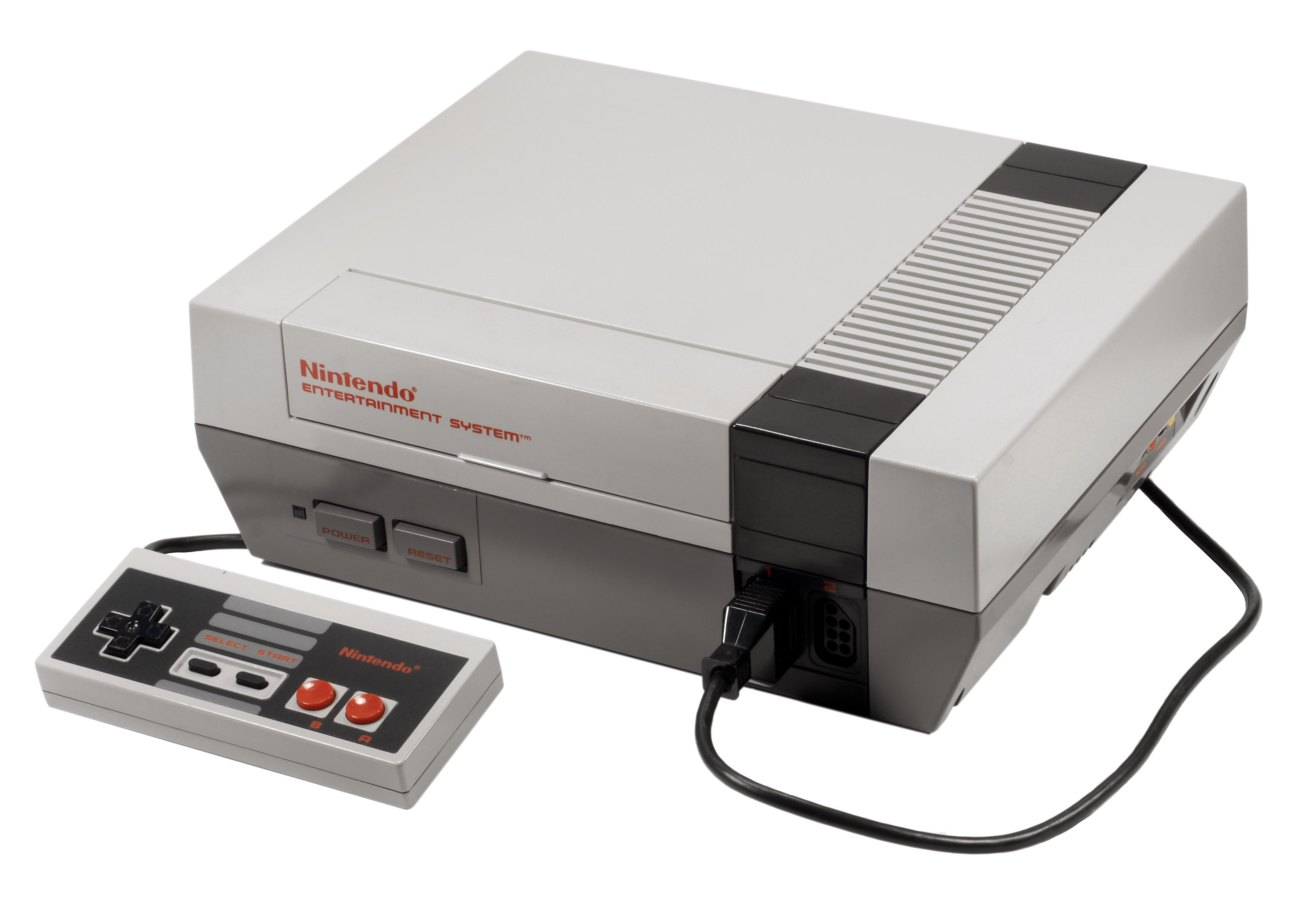 |
| All hail the savior. |
The beginning of the 90's saw the rise of a new kind of gaming, handheld consoles began to emerge with the first Nintendo Gameboy being released in 1989. Handheld games consoles had existed before this time, as early as 1977, but they were full of hardware problems and very linear, usually only containing one or a handful of inbuilt games. The gameboy was the first of its kind to use individual game cartridges and in 1996 saw the release of the first Pokémon game. Other handhelds came and went, but none held out competition like the Gameboy, and Nintendo released the Gameboy colour in 1998.
 |
| It's not actually a boy |
The 1990's also saw another revolutionary hit in gaming. The original PlayStation was released by Sony in 1994, and although not the first console to run a 3D game introduced a plethora of 3D games to the mass gaming audience. It was also the first console to begin using CD-ROMs to store games instead of cartridges, a format that would eventually be used throughout the entire industry and today. Welcome to the future!
References -
Computer Space - http://technologizer.com/2011/12/11/computer-space-and-the-dawn-of-the-arcade-video-game/
Magnavox Odyssey - http://classicgaming.gamespy.com/View.php?view=Articles.Detail&id=396
Handhelds - http://www.engadget.com/2006/03/03/a-brief-history-of-handheld-video-games/
Playstation - http://classicgames.about.com/od/consoleandhandheldgames/p/History-Of-The-Sony-Playsation-Kick-Starting-The-Disc-Revolution.htm
http://www.guinnessworldrecords.com/records-8000/first-3d-console-game/
Great video game crash of 83' - http://uk.ign.com/articles/2011/09/21/ten-facts-about-the-great-video-game-crash-of-83
Friday, 22 November 2013
A history of computers, part one
When did video games begin? This is quite a debatable question, depending on what you consider a video game to be. The likes of pong and Computer Space from the early 70's are a far throw from the games we play today. Huge advancements in technology over the last 40 years have paved the way for far more visually and technologically sophisticated games. Modern games don't simply consist of a small challenge involving two blocks and square anymore; they tell stories, engage the player on an emotional level. Some games even present the player with some kind of moral dilemma, forcing them to make their own decisions. But firstly, I'm going to step far back from here. What and where did all of this develop from? and how did the dawn of the earliest computers lead to the creation of the games console?
The Difference Engine is an enormous mechanical calculator invented by Charles Babbage and is thought to be the worlds first automated computing engine. Babbage designed his difference engine around the year 1849, however the first working machine was only completed in the year 1991 by the London Science Museum, some 140 years after it was designed. Right now, this has practically nothing in relation with video games, however this invention marks the starting point in history for the development of all automated computing machines to come.
Something else that interests me about the Difference engine is the fact that this is a mechanical computer, powered by hand using gears and levers and invented years before any electronically based computer. It interests me to think about how much of a difference this machine could have made to modern computing had it been possible to construct at the time of its design.
Video game consoles obviously have their roots more closely in programmable digital computers. The earliest of this kind is the Zuse Z3, created in 1941 during WWII by civil engineer and computing pioneer Konrad Zuse. Zuse created this computer as way to show that complicated arithmetic problems could be solved via a working machine, and the Z3 was used by the German Aircraft Research Institute to perform analysis and gather numerical information on wing flutter. While this is still very distant from a games console or modern computer the Zuse Z3 is worth a mention as it is considered to be the earliest fully functional programmable digital computer.
Some of the biggest technological advancements have typically occurred during times of war. The last 100 years has seen marginal advances in technology in all things from aircraft to computers, especially during the periods of WWI and II. Another pioneering wartime computer was the Colossus, invented in 1943 by Tommy Flowers. This time, it was the British who used this computer in order to crack and decode encrypted German messages during WWII.
While impressive at the time, its quite clear that computers were exceptionally linear and were usually only invented to carry out a single function. Its hard to believe that now, only 70 years on, we are in excess of small handheld devices and laptops that are infinitely more powerful.
In 1939 modern computer giant Hewlett-Packard had created their first product, the HP200A which was an audio oscillator, something that produces a single frequency or sound and is used for testing sound equipment. At the time of its invention HP was not an established company, the first few HP200A's were built in Dave Packard's own garage behind his house, however this simple and linear machine provided the foundation for the company to grow into one of the largest computer equipment manufacturers in the world.
The 1940's through to 50's saw many more developments in computing. International Business Machines, (IBM) who had been developing tables and equipment for computing since the early 1900's created the SSEC in 1948. This machine was used for calculating the positions of the moon and planets but only operated for a total of four years as it became quickly outdated by more ever growing technology.
1947 saw the invention of the Cathode ray tube amusement device by Thomas Goldsmith Jr and Estle Ray mann. This was a missile simulator, inspired by radar displays of world war 2. The cathode ray beam represented a crosshair, which appeared as a dot on the screen. Like most devices of the time, it used analog circuitry to allow the player to control the position of the crosshair over a plane in order to fire within a set time limit. In the broadest sense, the Cathode Ray tube amusement device is arguably the worlds first video game.
Something else that interests me about the Difference engine is the fact that this is a mechanical computer, powered by hand using gears and levers and invented years before any electronically based computer. It interests me to think about how much of a difference this machine could have made to modern computing had it been possible to construct at the time of its design.
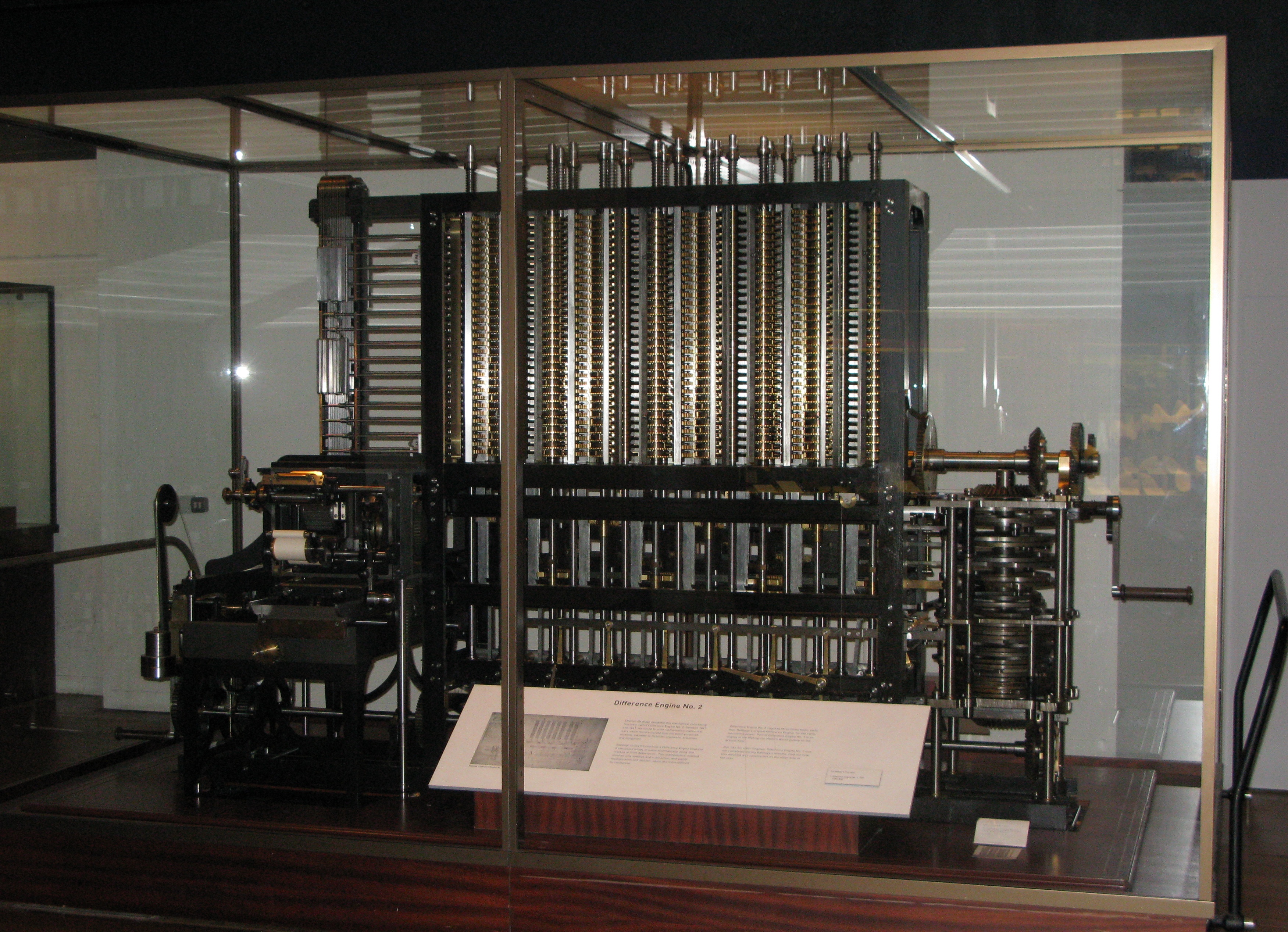 |
| Babbage's Steampunk calculator thingy |
Video game consoles obviously have their roots more closely in programmable digital computers. The earliest of this kind is the Zuse Z3, created in 1941 during WWII by civil engineer and computing pioneer Konrad Zuse. Zuse created this computer as way to show that complicated arithmetic problems could be solved via a working machine, and the Z3 was used by the German Aircraft Research Institute to perform analysis and gather numerical information on wing flutter. While this is still very distant from a games console or modern computer the Zuse Z3 is worth a mention as it is considered to be the earliest fully functional programmable digital computer.
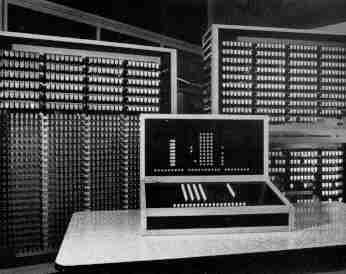 |
| Look everybody, the Zuse Z3 |
Some of the biggest technological advancements have typically occurred during times of war. The last 100 years has seen marginal advances in technology in all things from aircraft to computers, especially during the periods of WWI and II. Another pioneering wartime computer was the Colossus, invented in 1943 by Tommy Flowers. This time, it was the British who used this computer in order to crack and decode encrypted German messages during WWII.
While impressive at the time, its quite clear that computers were exceptionally linear and were usually only invented to carry out a single function. Its hard to believe that now, only 70 years on, we are in excess of small handheld devices and laptops that are infinitely more powerful.
 |
| The Colossus Mark 1 |
In 1939 modern computer giant Hewlett-Packard had created their first product, the HP200A which was an audio oscillator, something that produces a single frequency or sound and is used for testing sound equipment. At the time of its invention HP was not an established company, the first few HP200A's were built in Dave Packard's own garage behind his house, however this simple and linear machine provided the foundation for the company to grow into one of the largest computer equipment manufacturers in the world.
 |
| HP Audio Oscillator |
The 1940's through to 50's saw many more developments in computing. International Business Machines, (IBM) who had been developing tables and equipment for computing since the early 1900's created the SSEC in 1948. This machine was used for calculating the positions of the moon and planets but only operated for a total of four years as it became quickly outdated by more ever growing technology.
1947 saw the invention of the Cathode ray tube amusement device by Thomas Goldsmith Jr and Estle Ray mann. This was a missile simulator, inspired by radar displays of world war 2. The cathode ray beam represented a crosshair, which appeared as a dot on the screen. Like most devices of the time, it used analog circuitry to allow the player to control the position of the crosshair over a plane in order to fire within a set time limit. In the broadest sense, the Cathode Ray tube amusement device is arguably the worlds first video game.
 |
| Cathode ray tube amusement device |
Thursday, 17 October 2013
Summer studies
Figured I should probably post some work by now. Before I came to Leicester I had a pretty productive gap year working on my fundamentals and digital painting. I knew I would be bogged down with other things to do once I came here, so I didn't want to let up on the chance to work on my skills alone for a whole 12 months.
Here's some relatively recent studies from over summer, references taken from mjranum-stock and characterdesigns.com.


I think if you want to be a concept artist badly enough you can't look at it like any standard 'job'. Its got to be something you really want to do. If you're emotionally invested in your work then you'll probably be more inclined to keep progressing yourself. I crave drawing, so I do a lot of it, although if I'm really honest with myself probably not as much as I know I could be doing, especially now that I'm at university. There's always some degree of resistance.
Anyway, here's some more studies. Composition and value studies from old masters. There's Zorn, Bouguereau, Sargent and a Frazetta in there :) These were done on a small scale, probably no longer than 20 minutes each.

...and more figure work, focusing on values and rendering. The references are from mjranum-stock on Deviantart.


I'll go with this for now. Loads more studies and personal work to put up here but I'll probably stream it out gradually in the next few weeks rather than drop everything into a single post.
Cheers!
Here's some relatively recent studies from over summer, references taken from mjranum-stock and characterdesigns.com.
Anyway, here's some more studies. Composition and value studies from old masters. There's Zorn, Bouguereau, Sargent and a Frazetta in there :) These were done on a small scale, probably no longer than 20 minutes each.
I'll go with this for now. Loads more studies and personal work to put up here but I'll probably stream it out gradually in the next few weeks rather than drop everything into a single post.
Cheers!
Wednesday, 9 October 2013
Introduction
Hey! I guess I'll start my blog with a brief introduction regarding myself and my background. If you didn't gather from the blog title already, my name is Joe! I'm from a town called Leigh which is based in Manchester, England, however I am currently residing in Leicester where I am studying Game Art Design at De Montfort University.
To be honest I'm not much of a gamer, although I've had a passion for drawing probably for as long as I've been able to hold a pencil. My long term goal is to eventually land a career in the games industry as a concept artist designing characters, creatures, environments and maybe even painting full illustrations for marketing and covers, which is all quite typical of someone who might like games and art. While 2D art is where my main interests lie, I fully understand that to remain relevant and survive as an artist in the games industry one must also have proficient knowledge in 3D modelling, which I am currently learning. Realistically, I doubt I'll be able to enter the industry as a concept artist to begin with, so I chose to study on this course as it focuses not solely on 2D or 3D but on becoming a better and more proficient games artist all round. For this reason, and with all the industry links available, I see this course as a really viable way to get my foot in the door.
Over the next three years I'll be using this blog to record all of my achievements, failures and creative endeavors during my time studying at De Montfort. So, please feel free to follow along and watch as I hack and slash my way through hours of torment and sacrifice to achieve my goals. Who knows? with a little luck and a lot of hard work I might even land myself a job! :)
To be honest I'm not much of a gamer, although I've had a passion for drawing probably for as long as I've been able to hold a pencil. My long term goal is to eventually land a career in the games industry as a concept artist designing characters, creatures, environments and maybe even painting full illustrations for marketing and covers, which is all quite typical of someone who might like games and art. While 2D art is where my main interests lie, I fully understand that to remain relevant and survive as an artist in the games industry one must also have proficient knowledge in 3D modelling, which I am currently learning. Realistically, I doubt I'll be able to enter the industry as a concept artist to begin with, so I chose to study on this course as it focuses not solely on 2D or 3D but on becoming a better and more proficient games artist all round. For this reason, and with all the industry links available, I see this course as a really viable way to get my foot in the door.
Over the next three years I'll be using this blog to record all of my achievements, failures and creative endeavors during my time studying at De Montfort. So, please feel free to follow along and watch as I hack and slash my way through hours of torment and sacrifice to achieve my goals. Who knows? with a little luck and a lot of hard work I might even land myself a job! :)
Subscribe to:
Posts (Atom)